

The Science of Sustainable Weight Loss: A Complete Guide to Sleeve Gastrectomy
By Dr. Nirupam Sinha (MBBS, MS – General Surgery, FMBS, FMAS, FIAGES, CICO, FALS – Robotic)
15+ Years Experience | 4500+ Bariatric Surgeries
Introduction: Beyond Diet and Exercise
For millions of people in India, severe obesity is a relentless daily struggle that impacts everything from joint health to heart function. When years of strict diets and exercise regimens fail to produce sustainable results, it is easy to feel defeated.
However, clinical obesity is largely driven by biology and metabolism, not just willpower. Sleeve Gastrectomy (commonly known as Gastric Sleeve Surgery) is one of the most widely performed and effective weight-loss procedures globally because it directly addresses the biological root of overeating.
With over 15 years of experience and 4,500+ successful bariatric surgeries, I utilize advanced laparoscopic and robotic techniques to make this procedure safer, highly effective, and life-changing for my patients.
What is a Sleeve Gastrectomy and How Does It Work?
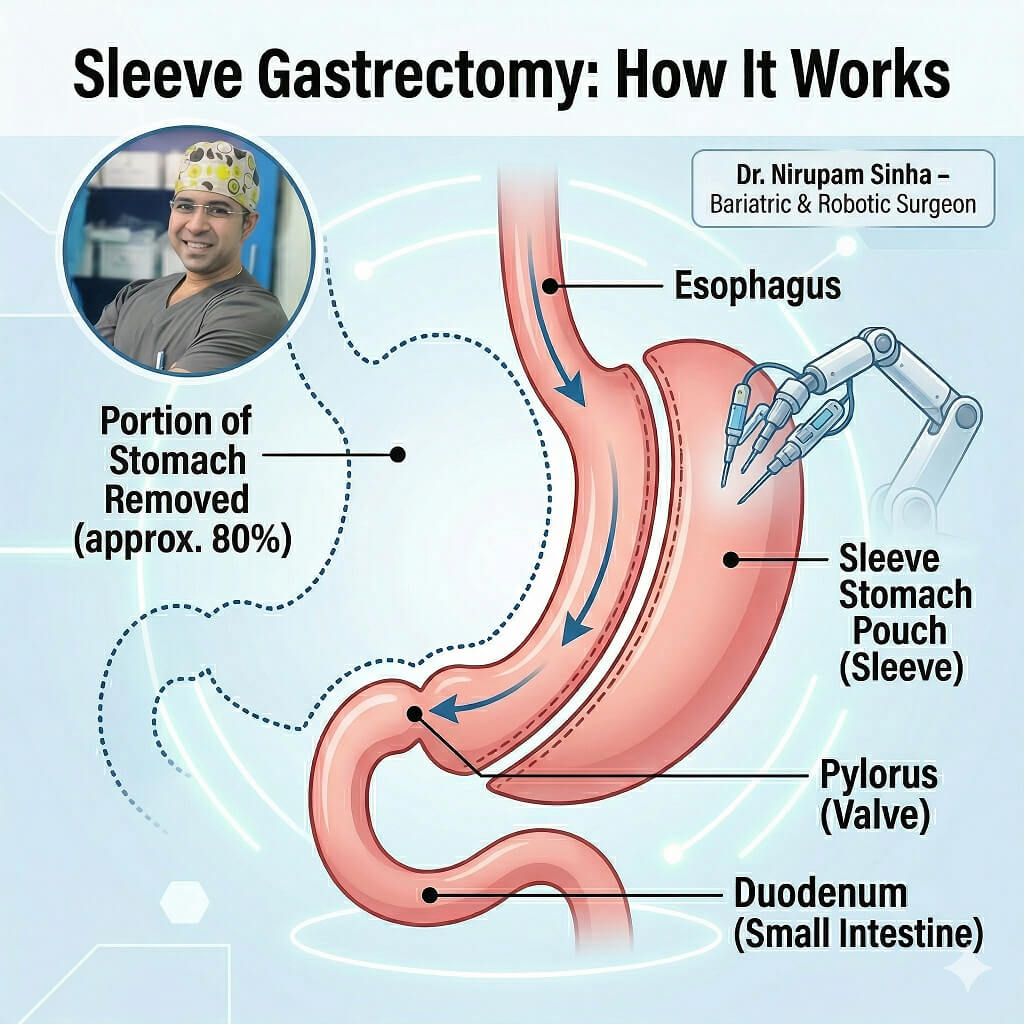
Sleeve Gastrectomy is a minimally invasive surgical procedure that transforms the size and shape of your stomach. Unlike a Gastric Bypass, it does not involve rerouting your intestines, making it a simpler, more streamlined surgery.
It triggers profound weight loss through two primary mechanisms:
-
The Physical Restriction: We carefully remove about 75–80% of the stomach, leaving a narrow, tube-like "sleeve" (roughly the size and shape of a banana). This significantly reduces the physical volume of food your body can hold, meaning you feel completely full after eating very small portions.
-
The Hormonal Reset (The Real Secret): The portion of the stomach that is removed is the primary area responsible for producing Ghrelin, the body's main "hunger hormone." By removing this tissue, your appetite drops dramatically. You aren't just forced to eat less; your chemical cravings are essentially quieted.
Who is the Ideal Candidate?
In India, we follow the established guidelines of the Obesity Surgery Society of India (OSSI) because our population tends to develop metabolic diseases at lower body weights. You may be an excellent candidate if:
-
BMI ≥ 37.5: With or without other obesity-related health conditions.
-
BMI ≥ 32.5: Accompanied by serious health conditions such as Type 2 Diabetes, Hypertension (High BP), severe Sleep Apnea, or PCOS.
The Sleeve is often the preferred choice for patients who want a highly effective procedure but wish to avoid the higher risk of long-term vitamin deficiencies associated with intestinal bypass surgeries.
The Robotic & Advanced Laparoscopic Advantage
As a surgeon specializing in Robotic and Advanced Laparoscopic Bariatric Surgery, my priority is your safety and rapid recovery.
-
Unmatched Precision: Advanced instruments and 3D visualization allow for meticulous suturing of the new stomach sleeve, drastically minimizing the risk of leaks.
-
Less Pain, Smaller Scars: Because the procedure is performed through a few tiny incisions, tissue trauma is minimal.
-
Faster Return to Life: Most patients are walking the same day of surgery and discharged within 1 to 3 days.
Sleeve Gastrectomy vs. Gastric Bypass
How do you know which surgery is right for you? Here is a quick comparison:
| Feature | Sleeve Gastrectomy | Gastric Bypass |
| Surgical Approach | Removes 80% of the stomach | Creates a pouch AND reroutes intestines |
| Mechanism | Restrictive + Hormonal | Restrictive + Malabsorptive |
| Best Suited For | High BMI, preventing nutrient deficiency | Severe Diabetes, severe Acid Reflux (GERD) |
| Complexity | Simpler, shorter surgery time | More complex |
| Vitamin Dependency | Lower risk of malabsorption | Strict lifelong vitamin regimens required |
Life After the Sleeve: Recovery and Results
Surgery is a powerful tool, but your long-term success relies on how you use it.
-
The Weight Loss Timeline: Most patients successfully shed 50% to 70% of their excess body weight within the first 12 to 18 months. Along with the weight loss, patients often see a dramatic improvement—or even complete remission—of Type 2 Diabetes, high blood pressure, and joint pain.
-
The Dietary Transition: Post-surgery, your diet will progress in strict phases: starting with clear liquids (Phase 1), moving to soft purees (Phase 2), and finally adapting to a regular, healthy solid food diet (Phase 3).
-
New Habits: Because your stomach is smaller, you must prioritize high-protein, nutrient-dense foods, chew thoroughly, and stay consistently hydrated.
Why Trust Dr. Nirupam Sinha?
When it comes to bariatric surgery, your surgeon's experience directly impacts your outcome. My practice offers:
-
High-Volume Expertise: Over 4,500 successful surgeries mean I have navigated almost every possible clinical scenario.
-
Technological Excellence: Utilizing the latest in robotic and laparoscopic surgical tech for maximum safety.
-
Compassionate, Lifelong Care: We don't just perform surgery; we provide the nutritional guidance and follow-up care necessary for you to keep the weight off for good.
Final Thoughts
Sleeve Gastrectomy isn't about taking the "easy way out"—it's about giving your body a fair fight against a complex metabolic disease. If you are exhausted from the cycle of weight loss and regain, it might be time to explore a medical solution. Consult with our expert team to find out if the Gastric Sleeve is the right path to reclaiming your health and vitality.
Frequently Asked Questions (FAQs)
1. Is a Sleeve Gastrectomy reversible?
No, the procedure is permanent because a portion of the stomach is physically removed.
2. Will I ever be able to eat normal foods again?
Yes. After the initial recovery phases, you can eat almost any type of food, but in significantly smaller, healthier portions.
3. Is it possible to stretch the sleeve and regain weight?
The stomach tissue can stretch slightly over time. If you consistently overeat or consume high-calorie liquid diets (like milkshakes or sodas), you can regain weight. The surgery requires a lifelong commitment to healthy habits.
4. Will I need to take vitamins forever?
While the risk of malabsorption is much lower than with a Gastric Bypass, you will still need to take specific bariatric multivitamins daily to ensure you get enough nutrients from your smaller meals.
5. How soon can I go back to work?
Most patients can return to a desk job within 1 to 2 weeks, while physically demanding jobs may require 3 to 4 weeks of recovery.