

Reclaiming Your Life: A Specialist’s Guide to Gastric Bypass Surgery
By Dr. Nirupam Sinha (MBBS, MS – General Surgery, FMBS, FMAS, FIAGES, CICO, FALS – Robotic)
15+ Years Experience | 4500+ Bariatric Surgeries
Introduction: The "Willpower" Myth
Obesity is a rapidly growing health concern in India, leading to serious conditions like diabetes, high blood pressure, heart disease, and joint problems. Yet, most patients I see have spent years blaming themselves for a "lack of willpower."
Clinical obesity is often a metabolic disease, not a character flaw. When traditional weight loss methods such as diet, exercise, and medications hit a biological wall, Gastric Bypass Surgery (Roux-en-Y) acts as a metabolic reset. With over 4,500 successful bariatric surgeries and 15+ years of experience, I have seen this advanced procedure do more than drop numbers on a scale—it restores your ability to live without the constant shadow of chronic illness.
What is Gastric Bypass and How Does It Work?
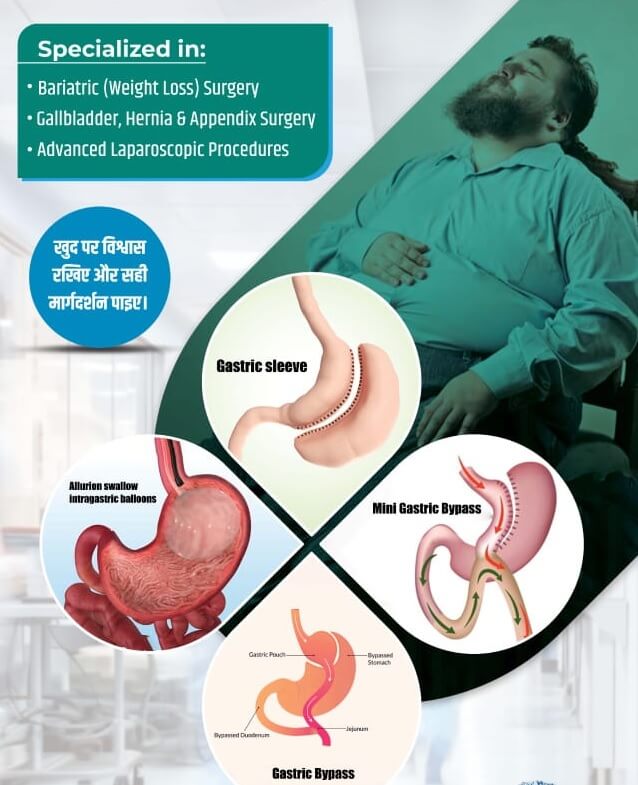
Gastric bypass is one of the most effective and proven bariatric surgeries for long-term weight loss. It works not just by making the stomach smaller, but by fundamentally changing your internal chemistry.
The surgery involves three main mechanisms:
-
The Restriction: We create a small stomach pouch (about the size of an egg), safely limiting how much food you can comfortably eat.
-
The Malabsorption: By connecting this new pouch directly to the small intestine and bypassing a portion of the digestive tract, your body absorbs fewer calories.
-
The Hormonal Shift: This is the insight most people miss. The surgery suppresses Ghrelin (the hunger hormone) and boosts GLP-1 (the satiety hormone). You don't just eat less; you actually want to eat less.
Who is Eligible for Gastric Bypass Surgery?
Obesity affects South Asians differently, and we often develop metabolic issues at lower body weights than Western populations. Based on Indian Guidelines (OSSI), you may be eligible if you meet the following criteria:
BMI Criteria:
-
BMI ≥ 37.5 (with or without other health conditions)
-
BMI ≥ 32.5 with obesity-related health conditions
Obesity-Related Conditions:
-
Type 2 Diabetes
-
High Blood Pressure
-
Sleep Apnea
-
Fatty Liver Disease
-
PCOS or Joint Pain
Other Factors:
-
Failed previous medical weight loss attempts
-
Age between 18–65 years
-
A strong willingness to commit to long-term lifestyle changes
The Robotic Edge: Why Precision Matters
As a surgeon specializing in advanced Laparoscopic and Robotic-Assisted Bariatric Surgery, I provide patients with a level of precision that traditional methods cannot match.
-
3D Visualization: High-definition 3D views allow for incredibly precise suturing and maneuvering.
-
Minimal Trauma: Smaller, precise incisions mean significantly less post-operative pain and minimized risks of infection.
-
Faster Recovery: Most of my robotic surgery patients are back to their daily routines much faster than standard expectations.
Gastric Bypass vs. Sleeve Gastrectomy
While both are highly effective, they serve different primary needs. The Sleeve is excellent for general weight loss, but Gastric Bypass is considered the "Gold Standard" for patients with severe Acid Reflux (GERD) or unmanaged Type 2 Diabetes.
| Feature | Gastric Bypass | Sleeve Gastrectomy |
| Best For | Severe Diabetes / Chronic Acid Reflux | General Obesity / High BMI |
| Weight Loss | 70–80% of excess weight within 12-18 mos. | 60–70% of excess weight |
| Mechanism | Restrictive + Malabsorptive | Restrictive only |
| Sugar Control | Immediate & Powerful (High remission rate) | Gradual improvement |
Recovery and Life After Surgery: The "Golden Year"
The first 12 months post-surgery are the "Golden Year" for maximum weight loss.
-
Hospital Stay & Recovery: You will typically stay in the hospital for 2–3 days and return to normal activities within 1–2 weeks.
-
The Diet Progression: You will transition strictly from clear liquids (Phase 1) to soft foods (Phase 2), and finally to a solid, healthy diet (Phase 3).
-
The Supplement Rule: Because we bypass part of the intestine, daily multivitamins, B12, and Calcium are non-negotiable for life to prevent nutritional deficiencies.
Like any surgery, there are risks (such as nutritional deficiencies or dumping syndrome), but with expert surgical care and dedicated follow-up monitoring, these risks are minimized significantly.
Why Choose Dr. Nirupam Sinha?
Choosing the right surgeon is the most critical step in your weight loss journey. My practice is built on:
-
Experience: 4,500+ successful bariatric surgeries over 15+ years.
-
Technology: Mastery of advanced laparoscopic & robotic techniques.
-
Care: Patient-centered, personalized pathways with high success rates and minimal complications.
Final Thoughts
Gastric bypass surgery is a life-changing procedure. The most successful patients aren't the ones who just eat less; they are the ones who use the surgery as a tool to build a whole new relationship with food and their bodies. If you are ready to reclaim your health, consult with our expert team to determine the best treatment plan for you.
Frequently Asked Questions (FAQs)
1. Is gastric bypass permanent?
Yes, the anatomical changes are permanent. However, maintaining your results requires a lifelong commitment to dietary and lifestyle changes.
2. How much weight can I expect to lose?
Most patients successfully lose 60–80% of their excess body weight within the first 12 to 18 months.
3. Is the surgery painful?
Pain is very manageable. Thanks to minimally invasive laparoscopic and robotic techniques, post-operative discomfort is significantly lower than open surgeries.
4. Can I regain the weight later?
Yes, weight regain is possible if dietary guidelines are ignored and old habits return. Surgery is a powerful tool, but it requires your partnership to maintain the results.
5. Will I have sagging skin after losing the weight?
This depends on your age, genetics, and total weight lost. Many patients manage this through targeted exercise, while some may choose body contouring procedures later on.
6. Can I get pregnant after Gastric Bypass?
Absolutely. In fact, resolving obesity often significantly improves fertility. However, we strictly recommend waiting 12–18 months post-surgery until your weight stabilizes before getting pregnant.