

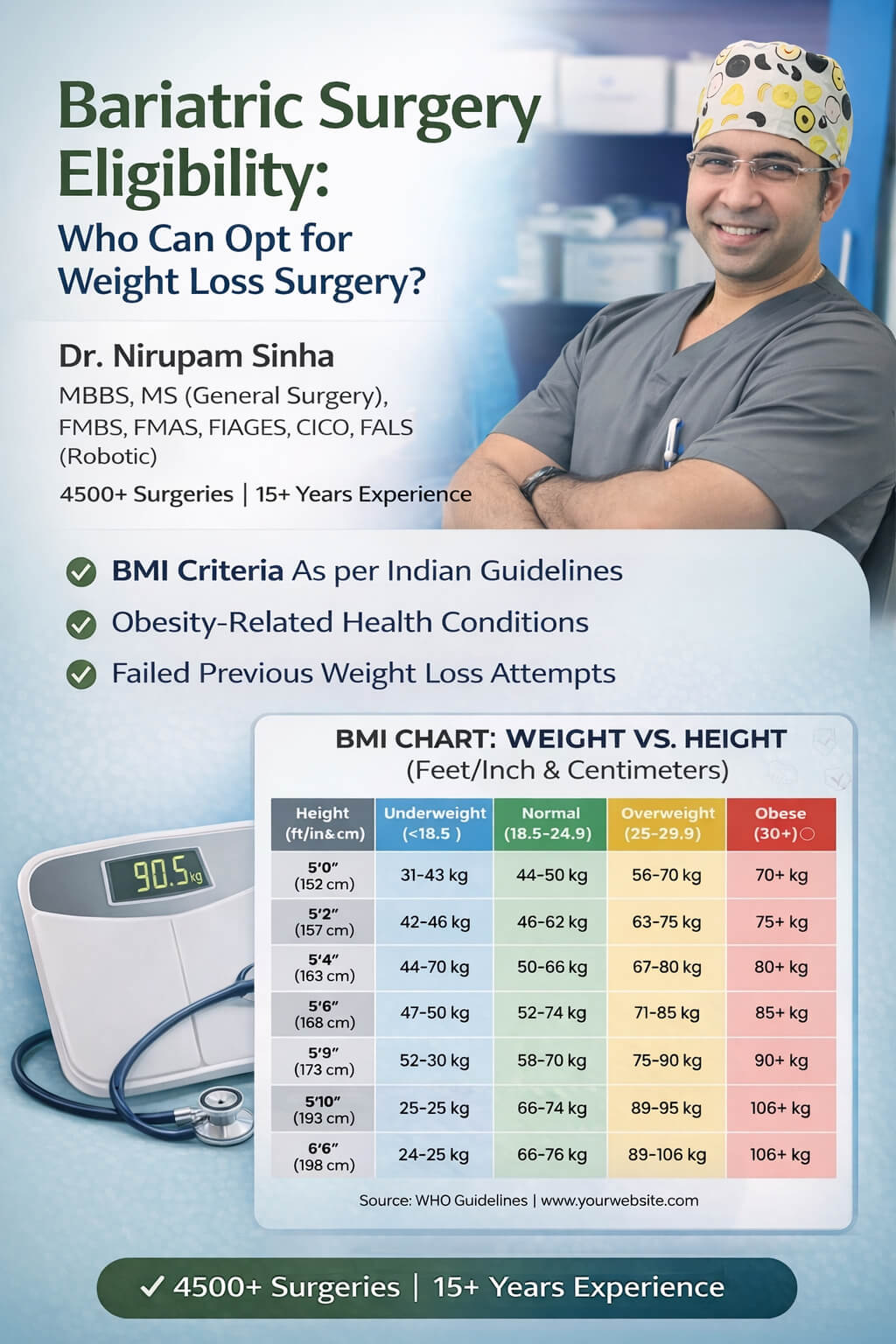
Bariatric Surgery Eligibility: Who Can Opt for Weight Loss Surgery?
By Dr. Nirupam Sinha (MBBS, MS – General Surgery, FMBS, FMAS, FIAGES, CICO, FALS – Robotic)
15+ Years Experience | 4500+ Bariatric Surgeries
Introduction
Obesity is no longer just a cosmetic concern—it is a serious medical condition linked with diabetes, hypertension, heart disease, joint problems, and reduced life expectancy. When diet, exercise, and medications fail to deliver long-term results, bariatric surgery becomes a highly effective and scientifically proven solution.
However, not everyone qualifies for weight loss surgery. Understanding bariatric surgery eligibility is crucial before taking the next step.
In this blog, Dr. Nirupam Sinha—one of India’s experienced bariatric surgeons with 4500+ successful surgeries and 15+ years of expertise—explains who is eligible for bariatric surgery and what factors are considered.
What is Bariatric Surgery?
Bariatric surgery refers to a group of procedures designed to help patients lose weight by:
- Reducing stomach size
- Limiting food intake
- Altering digestion and absorption
Common types include:
- Gastric Bypass
- Sleeve Gastrectomy
- Mini Gastric Bypass
- Revision Bariatric Surgery
Who is Eligible for Bariatric Surgery?
Eligibility is based on Body Mass Index (BMI), medical conditions, and overall health status.
1. BMI Criteria (As per Indian Guidelines)
For Indian patients, criteria are slightly lower than Western standards:
- BMI ≥ 37.5 → Eligible even without comorbidities
- BMI ≥ 32.5 with obesity-related diseases → Eligible
2. Presence of Comorbid Conditions
Patients with lower BMI may qualify if they have:
- Type 2 Diabetes
- High Blood Pressure
- Sleep Apnea
- Fatty Liver Disease
- PCOS (in women)
- Joint Pain / Osteoarthritis
? Bariatric surgery often helps reverse or significantly improve these conditions.
3. Failed Weight Loss Attempts
You may be eligible if:
- Diet and exercise have not worked
- You regain weight repeatedly
- Medications are ineffective
Surgery is considered when non-surgical methods fail to provide sustainable results.
4. Age Criteria
- Generally suitable for: 18 to 65 years
- In special cases, surgery may be considered outside this range under expert supervision
5. Psychological Readiness
Candidates should:
- Understand lifestyle changes required
- Be mentally prepared for long-term follow-up
- Not have uncontrolled psychiatric illness
6. Commitment to Lifestyle Changes
Bariatric surgery is not a shortcut—it’s a tool. Long-term success depends on:
- Healthy diet
- Regular exercise
- Follow-up consultations
Who is NOT Eligible for Bariatric Surgery?
Some patients may not be suitable, such as:
- Severe untreated psychiatric disorders
- Alcohol or drug dependency
- Uncontrolled medical conditions
- Patients unwilling to follow post-surgery guidelines
Pre-Surgery Evaluation
Before surgery, a detailed assessment is done:
- BMI and body composition analysis
- Blood tests
- Cardiac and pulmonary evaluation
- Nutritional assessment
- Psychological evaluation
This ensures maximum safety and best outcomes.
Benefits of Bariatric Surgery
Patients who qualify and undergo surgery often experience:
- Significant and sustained weight loss
- Diabetes remission (in many cases)
- Improved heart health
- Better mobility and joint relief
- Enhanced quality of life
Why Choose an Experienced Bariatric Surgeon?
Choosing the right surgeon is critical for safety and results.
Dr. Nirupam Sinha is a highly qualified bariatric and robotic surgeon with:
- MBBS, MS (General Surgery)
- FMBS, FMAS, FIAGES, CICO
- FALS (Robotic Surgery)
- 4500+ successful bariatric surgeries
- 15+ years of surgical experience
His expertise ensures:
- Advanced laparoscopic & robotic techniques
- Minimal complications
- Faster recovery
- Personalized patient care
Final Words
Bariatric surgery can be life-changing—but only for the right candidates. If you are struggling with obesity and related health issues, checking your eligibility is the first step toward a healthier future.
Consult an experienced specialist like Dr. Nirupam Sinha to evaluate your condition and guide you toward the best treatment plan.
Frequently Asked Questions (FAQs)
1. What is the minimum BMI for bariatric surgery in India?
BMI ≥ 32.5 with comorbidities or ≥ 37.5 without comorbidities.
2. Can bariatric surgery cure diabetes?
It can significantly improve or even reverse Type 2 diabetes in many patients.
3. Is bariatric surgery safe?
Yes, when performed by an experienced surgeon, it is considered safe and effective.
4. How much weight can I lose?
Patients typically lose 60–80% of excess weight within 12–18 months.
5. Is weight regain possible?
Yes, if lifestyle guidelines are not followed—but proper care helps maintain results.